

A personal story about the moment my body stopped me, and the framework I have used with leaders ever since.
Most of us think inner strength is something we have to go and find. We look for it in a book, in a course, in a conversation with someone we hope will hand it to us. For years I believed the same thing, and I believed strength meant pushing through. Doing more. Never stopping.
Then in 2003 a doctor told me I was not allowed to lift anything. Not even a tea pan.
This is the story of how the smallest, most ordinary object I was forbidden to pick up taught me what strength actually is, and the framework I have returned to with my clients ever since.
The fourteen days that caught up with me
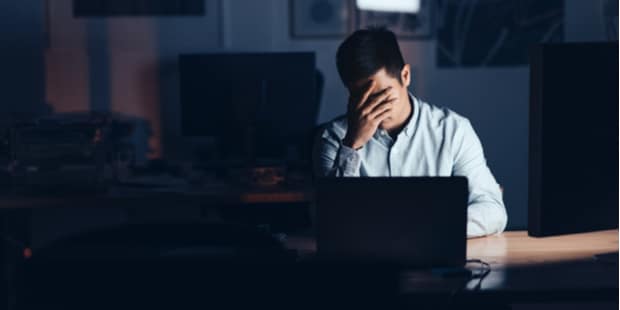
I had been working fourteen days straight. No real breaks, no rest, the kind of stretch I had quietly come to think of as proof that I was good at my job. A stiff neck was the only warning my body gave me, and I did what high achievers do. I ignored it.
When I finally went in for what I assumed was a routine check-up, I walked out with a herniated disc and one instruction that stopped my whole life. Lift nothing.
At home was my two-year-old son. And just like that, I could no longer pick him up.
I want to be honest about what that did to me, because it was not noble at first. I cried. I felt useless. The thing I had been most proud of, my ability to carry everything and everyone, was the very thing that had broken me. For a while I sat in that helplessness, not because I had reached some wise acceptance, but because there was nothing else I could do.
The quiet shift
Somewhere in those slow weeks, something changed.
I started to understand that I was not the disc. I was not the meetings I was missing, or the things I temporarily could not do, or the version of me that used to manage everything. The pain was real. But it was information about my body, not a verdict on who I was.
The moment I saw that clearly, I made a decision that has stayed with me for more than twenty years.
No pain can define me.
Why we see strength in everyone but ourselves
Years later, going through cancer treatment, I noticed something that connects directly back to that hospital room. People kept telling me I inspired them. That my journey moved them. And inside, I felt nothing of the sort. I was simply trying to get through the day like anyone else.
That gap is something I see in almost every senior leader I work with.
From the outside, your steadiness looks like strength. From the inside, it just feels like effort, like getting on with things, like the bare minimum required to keep going. So you discount it. You assume that because it felt ordinary to you, it cannot really count. And the more capable you are, the more invisible your own strength becomes to you, because you have normalised it.
This is the quiet cost so many accomplished people carry. They feel like impostors precisely because the effort never shows on the surface. They are strong in ways everyone can see except themselves.
The Pan Moment, a framework you can use
The season that began with that tea pan became a framework I now return to again and again with the leaders I coach. I call it The Pan Moment, named for the smallest, most ordinary thing I was not allowed to lift.
It is not a formula to push through pain faster. It is a way of meeting it without letting it decide who you are.
Let yourself feel it. Strength does not begin with courage. It begins with honesty. Naming that you are tired, frightened, or helpless is not the opposite of strength. It is the start of it.
Find your anchor. Not a goal. A person, a reason, something real you cannot walk away from. For me it was a small boy who needed his mother. Yours will be your own.
Sit in the helplessness. Resist the urge to rush past it and fix everything immediately. Some things have to be felt fully before they can be moved through.
Separate your identity from your capacity. You are not what you can or cannot do in this moment. A hard season is something you are passing through, not the sum of who you are.
Decide who defines you. Pain is information. It is never the final word on your worth, your ability, or your future. You get to make that call, not the pain.
What I know now
I look back on that hospital room and I no longer see the end of something. I see the beginning of something far deeper in me. I don’t see the pain as the worst thing that happened to me anymore. I see it as the thing that finally taught me who I actually am.
If you are carrying something heavy right now, a health season, a hard transition, a quiet exhaustion no one around you can see, you do not have to feel strong in order to be strong. The people around you can often see it long before you can. And the strength you are looking for somewhere outside yourself has, in all likelihood, been inside you the whole time.
That is the work I do with senior leaders. Not handing them strength they lack, but helping them rediscover what was already there, especially in the seasons that try to convince them otherwise.
If something in this story sits close to where you are right now, I would be glad to talk. You can book a quiet conversation with me through my website, and we can start with whatever you are carrying.
With love,
Usha Usha Nagrani Executive Leadership Coach | Leading Well When It Matters Most

Usha Nagrani, an HR Leader turned ICF Executive Coach, empowers senior management professionals and business leaders to achieve breakthroughs as expats, build cross-cultural teams, and navigate the exciting journey of career acceleration.